Bob Dylan wins 2016 Nobel Prize for Literature

The Swedish Academy's permanent secretary, Sara Danius, said Dylan, 75,
"is a great poet in the English-speaking tradition." She drew
parallels between his work and that of ancient Greek poets.
"If you look back, far back, 2,500 years or so, you discover Homer and
Sappho and they wrote poetic texts that were meant to be listened to, that were
meant to be performed, often with instruments -- and it's the same way with Bob
Dylan," she said.
Although Dylan is not in the established canon of literary writers, Danius
praised his creative output over five decades, including his constant
reinvention of himself. She also described him as "a wonderful sampler, a
very original
sampler."
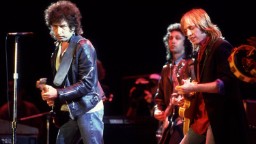 Dylan's music and lyrics
spoke to a generation of people during the tumultuous 1960s and helped
galvanize the civil rights movement. His influence continues to permeate
through rock, pop and folk music today.
Dylan's music and lyrics
spoke to a generation of people during the tumultuous 1960s and helped
galvanize the civil rights movement. His influence continues to permeate
through rock, pop and folk music today.
Asked where those unfamiliar with Dylan's work should start, Danius -- a
professor in literature at Stockholm University-- recommended his 1966 album
"Blonde on Blonde," saying it contained "many examples of his
brilliant way of rhyming and putting together refrains and his pictorial
thinking."
 'Strikingly versatile' artist
The award will certainly be a surprise for some. An article
published in the New Republic October 6 was
headlined: "Who Will Win the 2016 Nobel Prize in Literature? Not Bob
Dylan, that's for sure."
At that point, Dylan was given odds of 50/1 by bookmaker Ladbrokes to win
the prize.
Bookmakers' favorites for 2016 included Japanese author Haruki Murakami, American
novelist Philip Roth and Kenyan writer Ngugi wa Thiong'o but the actual list of
nominees will be kept secret for 50 years.
Perhaps seeking to forestall criticism, the Nobel Committee said in a
statement that Dylan had "recorded a large number of albums revolving
around topics like the social conditions of man, religion, politics and
love" and that his words have repeatedly been republished.
"As an artist, he is strikingly versatile; he has been active as
painter, actor and scriptwriter," it added.
'Profound impact on popular
music'
Dylan's award will be welcomed by legions of fans around the world.
One, Robyn Hitchcock, tweeted: "He launched me and many others on
oceans of which we'd never dreamed..."
Dylan was born Robert Allen Zimmerman in Duluth, Minnesota, in 1941, and
released his first album, "Bob Dylan," in 1962. That eponymous album
consisted mostly of cover versions of old folk songs.
His second album, 1963's "The Freewheelin' Bob Dylan," contained
original songs he had written, such as "A Hard Rain's Gonna Fall" and
"Blowin' in the Wind." Dozens more albums were to follow.
Since those early days, he's collected 10 Grammy Awards, including Album of
the Year; one Golden Globe and one Academy Award.
In 2008, Dylan won a Pulitzer Prize special citation for "his profound
impact on popular music and American culture, marked by lyrical compositions of
extraordinary poetic power."
US President Barack Obama presented him with the Presidential Medal of
Freedom in 2012, the nation's highest civilian honor. At that time, Obama said,
"I remember, you know, in college, listening to Bob Dylan and my world
opening up, 'cause he captured something about this country that was so
vital."
With Thursday's announcement, Dylan also becomes the 108th winner of the
most prestigious literature award in the world.
He's the first American to be awarded the accolade since author Toni
Morrison in 1993.